
Outreach and Experience
What REALLY makes people want to be religious?

Last week, a friend sent me Steve Lipman’s fascinating article An Empty Place at the Jewish Table: Why Are Young Jews Dropping Out? It’s an important question, as he notes that formerly Orthodox Jews “constitute a significant minority in the demographic makeup of many current Modern Orthodox and Haredi communities. Perhaps 10-30 percent. And in some Haredi communities, according to anecdotal claims, losses from OTDs may outnumber the gains from ba’alei teshuvah joining their ranks.” Why is this so? Lipman suggests several reasons:
Because these men and women no longer believe in the truth of the Torah, the sanctity of the mitzvot, the Sinai-given obligation to follow the path of accepted mesorah that has guided the Jewish people for millennia. They literally have not kept the faith. If “they” were standing at Sinai, what does that have to do with them three millennia later?
Because it doesn’t make sense to them. It’s not worth the effort. It’s restrictive – certain jobs and classes are more enticing, more meaningful; dates, more attractive.
Because abiding by the taryag mitzvot, in their opinion, does not make them a good Jew; many of them stay connected to Jewish life, in other, less-“religious,” more-autonomous ways.
Because they don’t see (a demanding) God as a major part in their lives.
Because… why search for a reason, or reasons, why our best and brightest find no emet in Torah? They may not have extensively thought out the whys for their lifestyle changes; Judaism, at least as carried out by their parents and still-frum siblings, simply does not mean as much to them as it once did.
Already, this article is remarkably open about the reality. The truth of the matter which many are unwilling to admit is that people leave Orthodox observance for all sorts of reasons. Do some merely do so to chase taivas? Possibly. But many leave for intellectual and moral reasons. And plenty leave passively as a result of never having found meaning in an Orthodox life to begin with or losing that meaning over time for one reason or another.
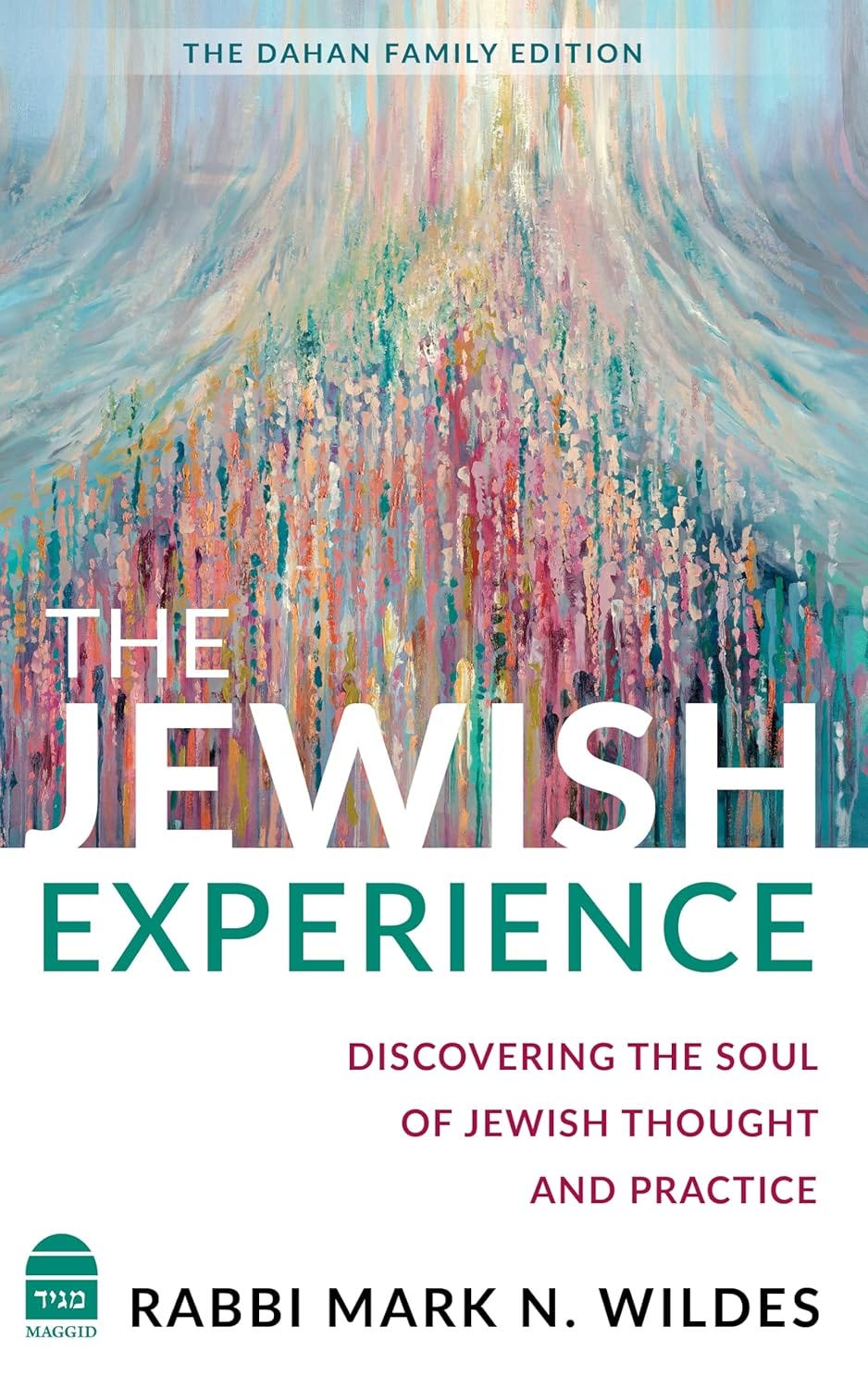
This is perhaps why, as I point out in my review of Rabbi Mark N. Wildes’ The Jewish Experience, so much contemporary outreach is about “how to cultivate the most emotionally resonant experiences rather than how to formulate the most intellectually compelling arguments.” This is also perhaps why the pieces of advice offered by Lipman are themselves overwhelmingly experiential in nature:
Don’t say no if your child requests a compromise or accommodation that does not blatantly transgress halakhah. Inordinate inflexibility is likely to turn the child away.
Don’t automatically condemn or criticize. That may be what turned him or her off in the first place.
Emphasize what part of your – or your child’s – observance is important. Not every mitzvah or minhag is of equal spiritual value.
Give them time. His or her beliefs or behavior at 16 may not be the child’s feelings about Judaism at 26.
Focus on what your child likes about Judaism. That’s something to build on.
Pick your battles. Is every offense to your way of doing things worth a fight?
Emphasize modeling, not coercion. Show, don’t tell, what a child should be doing.
Accept half a loaf; accept what your child is doing. That will make your child more willing to listen.
Look at yourselves, not at them. First, ask yourself why your child is acting in a way of which you do not approve.
Don’t worry about the OTD child’s effect on other children’s possible shidduchim. If you do, it sends the message that the other kids are more important, more valuable to you.
Don’t be surprised by your child’s attitude. Did you ever deviate from your parents’ expectations?
Don’t immediately react to every criticism of Orthodox customs.
Acknowledge and validate your children’s concerns. Even if their criticisms are not true, they are your child’s reality.
Don’t blame yourself for the choices that your child, at this stage an adolescent or young adult, makes. Isaac and Yaakov also erred (overlooking one child’s shortcomings, and favoring one son over his brothers, respectively). Are you more holy than the Avot?
Pay no attention to outsiders who criticize you or your child. Did they raise your child?
Indeed, Lipman proceeds to say what many may consider the quiet part out loud but more and more Modern Orthodox authors have been affirming: “While logic dictates that belief determines action, Jewish tradition strongly suggests that action can shape belief – opening up an “OTD” individual to the beauty of Judaism, but not forcing him or her to take part in a Jewish activity, can influence the person to return; i.e., show, don’t tell. And don’t demand… if the place of God in raising and educating a Jewish child does not trump the dos and don’ts, a child is more likely to find the why be Jewish missing.”
On the other hand, as I note in my review of Wildes, experiences by definition cannot be taught. For an experience to have any value whatsoever, it must be felt in the kishkes so to speak. “If someone personally experiences the Torah as a document that contains too much depth and insight to have been a product of humanity, the rebirth of the State of Israel as miraculous, and the warmth and kindness of a Shabbat meal as too good to be true then there are several additional arguments to strengthen their convictions. On the other hand, few of the ideas presented… will suffice for those who do not already possess a bias towards the Jewish experience.”
On a theological level, this has also been pointed out by philosopher Jerome (Yehuda) Gellman who concluded in his book Mystical Experience of God: A Philosophical Inquiry that
We have found that the Argument from Perception is not universally rationally compelling, in the sense of rationally obligating all who would ponder it. It does not compel four types of people:
Those who, because of God’s non-dimensionality, will not grant recognition to a practice of identifying something as God in experience…
Those for whom supernatural explanation is not an explanatory option, and so will not countenance explaining an experience in terms of God’s activity…
Those who rationally reject the Argument from Perception because of embracing an alternative explanation for God-perceptions…
Those who, because of gender objections, will not accept the traditional context in which God-perceptions are explained to be of the classical God of theism, though this does not touch the generic concept of God
Gellman also notes, however, that “none of the positions taken in (1)-(4) has been shown to be rationally compelling for everyone either… Therefore people can be in their rights to allow such a practice to help shape their rational beliefs.”
In other words, belief (and thus identification with a group) on the basis of experience alone may well be justifiable for those who accept such experiences for themselves but not for those who do not or cannot accept them. Someone who does not share your experience, therefore, is under no obligation to give the experience you describe to them any weight in their own decision-making process.
The question Orthodox rabbis and apologists must then ask themselves is whether such a situation is lechatchila or bideavad. Is it an ideal or simply a consolation to reliance on experience over argumentation? More books than ever are arguing the former, while classes and conversations imply the latter. Something tells me that this incongruity will not remain stable for long.
My review of The Jewish Experience: Discovering the Soul of Jewish Thought and Practice can be read HERE.
Disappointed you are not making your new book 'The book of books (reviews)'
Lipman’s observations are important, but they are basically the advice that those in kiruv and who work with those who are OTD have been giving for well over 20 years.
The “leavers” (to use a term from the OU report on Attrition and Connection) and those who are the intended audience for Rabbi Wildes’ book are totally different demographics, but the common ground of, literally, getting people through the door is the same, while the endgame is different.
I think the “experience” being something positive is key, but for someone who has left Orthodoxy it can a long bridge to cross before separating the experience of Yiddishkeit with THEIR previous experiences of Yiddishkeit.
I haven’t read Rabbi Wildes’ book yet, but based on an interview I listened to and your review his book is meant as an entry point.
This issue you highlight, the divide between written word and experience is something that one of Rabbi Wildes’ mentors, a pioneer in adult outreach, Rabbi Rabbi Ephraim Buchwald, nailed in the early 90s when he coined this gem, “For the price of a chicken, you can save a Jew.” Meaning that letting a non-Orthodox person experience a traditional Shabbos meal in an Orthodox home can turn them on to the beauty of Yiddishkeit. Of course, at some point one has to learn the operational aspects of Shabbos and how to heat up the meal properly, but the “experience” can be the entry point.
While there are different models of kiruv out there (especially on campus these days, from what I hear) they all involve food so the “experience” is still one of many entry points. 20 or 30 years ago I don’t think a Torah class was a popular entry point, today that hooks a lot people people. We need multiple options.